

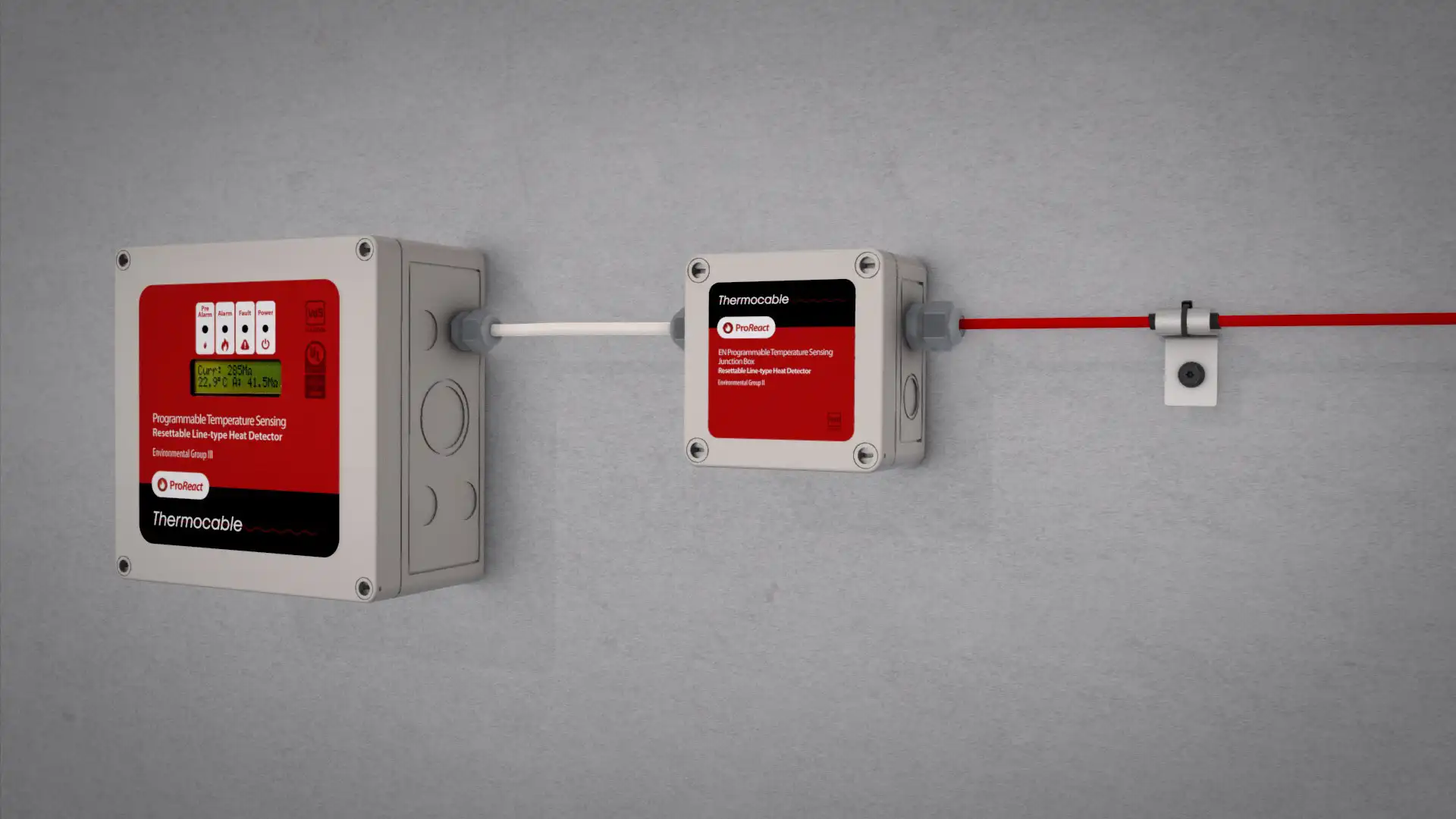
When it comes to fire safety in industrial or commercial facilities, choosing the right detection technology can make all the difference. Among the most reliable and cost-effective solutions is the linear heat detector. If you are planning to purchase one, understanding the linear heat detector price and the factors that influence it is essential. This guide covers how linear heat detectors work, why they are valuable, their price breakdown in the Middle East, and the best models you can find on Stock On Fire.
When designing a reliable fire alarm infrastructure, understanding the Basic Network Components in Fire System is essential. These components include control panels, interface modules, detectors, and communication devices that ensure seamless integration between different fire safety elements. By choosing high-quality components from trusted brands available on Stock On Fire, facility managers can guarantee stable performance, easier maintenance, and long-term protection for industrial and commercial sites.
Shop Now – Discover High-Quality Fire Safety & Industrial Products :
What Is a Linear Heat Detector and How Does It Work?
Basic Working Principle
A linear heat detector is a continuous cable-type sensor that detects changes in temperature along its length. Unlike point detectors, which only monitor heat at a specific spot, linear detectors provide full coverage across long distances, making them perfect for tunnels, conveyor belts, and large warehouses.
Main Components and Design
Most systems consist of a heat-sensitive cable, an interface module, and junction boxes to connect sections. The sensing cable responds when the temperature reaches a preset threshold or rises rapidly, sending an alarm to the fire control panel. You can browse detailed accessories like the Kidde Interface Module

or the System Sensor Junction Box directly on Stock On Fire.
 Common Use Cases in Industrial and Commercial Buildings
Linear heat detectors are widely used in:
- Power plants and substations
- Warehouses and logistics hubs
- Tunnels, cable trays, and conveyors
- Oil & gas facilities where explosion-proof protection is required
Sell Your Stock Faster—Register as a Vendor Today :
Why Choose Linear Heat Detectors for Fire Safety Systems?
Advantages Over Spot Detectors
The biggest advantage is coverage. A single cable can monitor hundreds of meters, eliminating the need for multiple point detectors. They are also less affected by dust, humidity, or airflow compared to smoke detectors.
Ideal Applications for Linear Heat Detection
They are particularly suitable in environments where smoke detection is impractical, such as outdoor pipelines, parking garages, or production areas with high dust levels.
Integration with Other Fire Alarm Systems
Linear detectors integrate seamlessly with advanced fire alarm panels and modules. For example, the Kidde Interface Module
ensures compatibility between the cable sensors and control panels, while accessories like the System Sensor End of Line Box help maintain system reliability.

Linear Heat Detector Price Breakdown in the Middle East
Key Factors That Affect Pricing
Several elements influence the linear heat detector price:
- Sensing cable length – longer cables cost more but cover larger areas.
- Temperature rating – options include fixed temperature and rate-of-rise models.
- Approvals and certifications – products with UL, FM, or LPCB certifications are generally priced higher.
- Brand and origin – international brands like System Sensor, Kidde, and Esser may have different pricing depending on distribution channels.Modern fire safety solutions depend heavily on efficient Networks and Workstations – Fire System Stock On Fire. These elements connect detectors, modules, and control panels into one cohesive system, allowing real-time monitoring and faster response during emergencies. With the right setup, organizations can streamline operations, ensure data accuracy, and enhance overall fire protection across industrial and commercial facilities.
Explore Our Fire Alarm & Detection Solutions :
Price Range by Category
- Basic Models – Affordable solutions for small facilities, generally starting at entry-level prices.
- Heavy-Duty Industrial Models – Designed for demanding environments, these are mid-range in cost.
- Explosion-Proof Models – Premium detectors for oil & gas or hazardous locations, typically at the higher end of the market.
You can explore the full Linear Heat Detection category on Stock On Fire to compare prices and features.
Best Linear Heat Detectors Available on Stock On Fire
Featured Products With Competitive Prices
Stock On Fire offers a wide range of detectors and accessories, such as:
- System Sensor JTW-LD-86-887N Digital Heat Cable – an advanced sensing cable for reliable coverage.

- Esser 761290 Linear Detector – a trusted model for industrial applications.

- System Sensor JTW-LD-138-887 Digital Heat Cable – ideal for extended coverage areas.
- System Sensor MB Junction Box – essential for connecting and extending cables.
For the full catalog, visit the Stock On Fire shop.
Tips for Choosing the Right Linear Heat Detector for Your Facility
Cable Length vs. Coverage Area
Determine how many meters of sensing cable you need based on the facility’s layout. A proper calculation prevents overspending while ensuring full protection.
Temperature Ratings and Sensitivity
Choose between fixed temperature cables for stable environments or rate-of-rise models for dynamic industrial spaces.
Compatibility With Fire Panels
Always check compatibility with your existing fire alarm system. Accessories such as interface modules and end-of-line boxes help maintain seamless operation.
A Wireless Fire Alarm System offers a flexible and cost-effective solution for buildings where cabling is difficult or expensive. Instead of relying on wired connections, wireless detectors and modules communicate through secure radio signals, ensuring quick installation and reliable performance. This makes wireless fire alarms ideal for historic buildings, temporary structures, or large facilities that require scalable safety solutions. By choosing high-quality wireless systems from trusted brands on Stock On Fire, facility managers can ensure advanced fire protection with minimal disruption to their operations.
Request Your Free Quote Today:
FAQs
How much does a linear heat detector cost in Saudi Arabia or UAE?
The linear heat detector price in Saudi Arabia or the UAE varies widely depending on cable length, certification, and model type. On average, basic models start at affordable rates, while heavy-duty and explosion-proof versions are higher.
Are linear heat detectors suitable for outdoor use?
Yes, many models are designed for outdoor applications such as pipelines, parking garages, or open industrial areas, provided they have weatherproof accessories.
Can I install linear heat detectors myself, or do I need a professional?
While installation is straightforward, professional setup is always recommended to ensure compliance with local fire safety standards.
What’s the average lifespan of a linear heat detection system?
A well-maintained linear heat detection system can last 10–15 years depending on environmental conditions and brand quality.
Final Thoughts
Investing in the right fire detection system is critical for protecting lives, assets, and operations. By understanding the linear heat detector price, the factors influencing it, and the best options available on Stock On Fire, you can make a confident purchasing decision. Whether you need a basic model or an explosion-proof solution, Stock On Fire provides reliable options tailored for the Middle East market.
